
The Genius Effect.
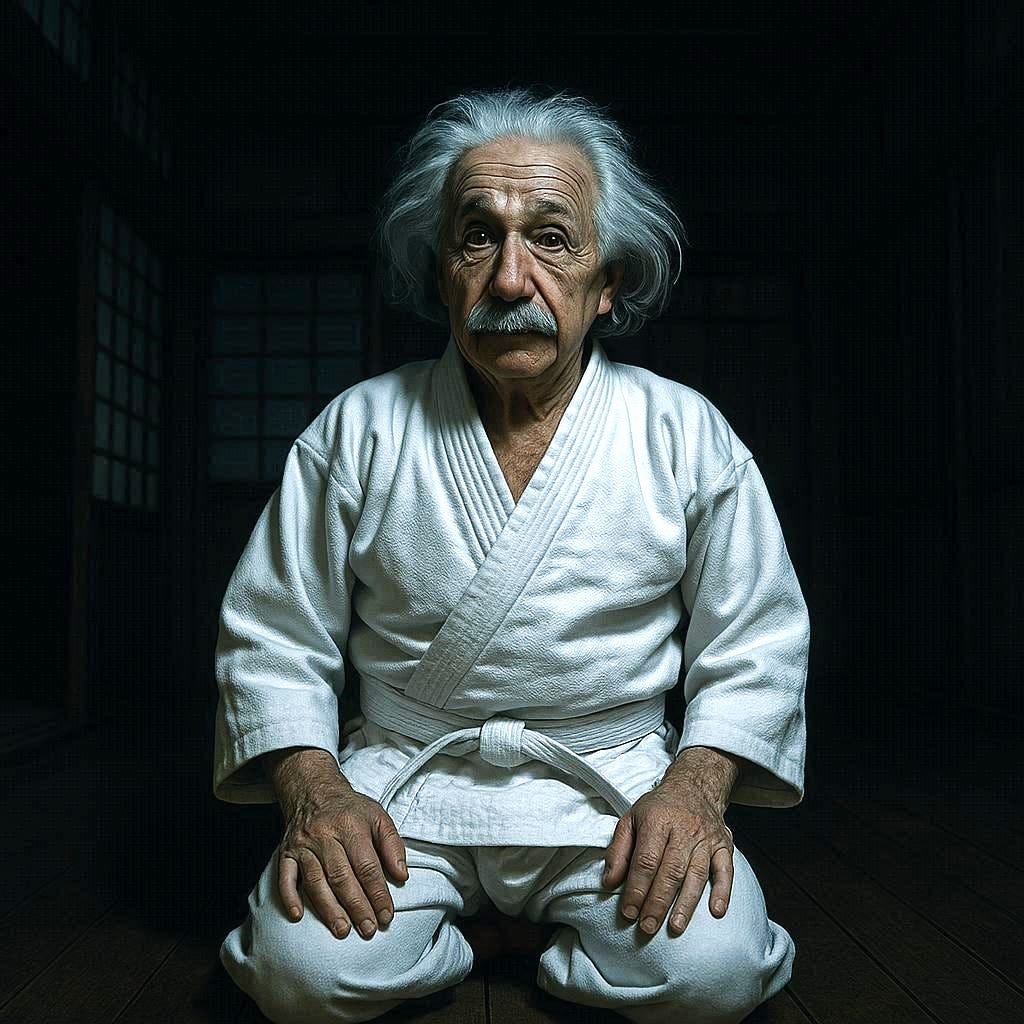
Be careful what you are doing when you label someone a martial arts genius.

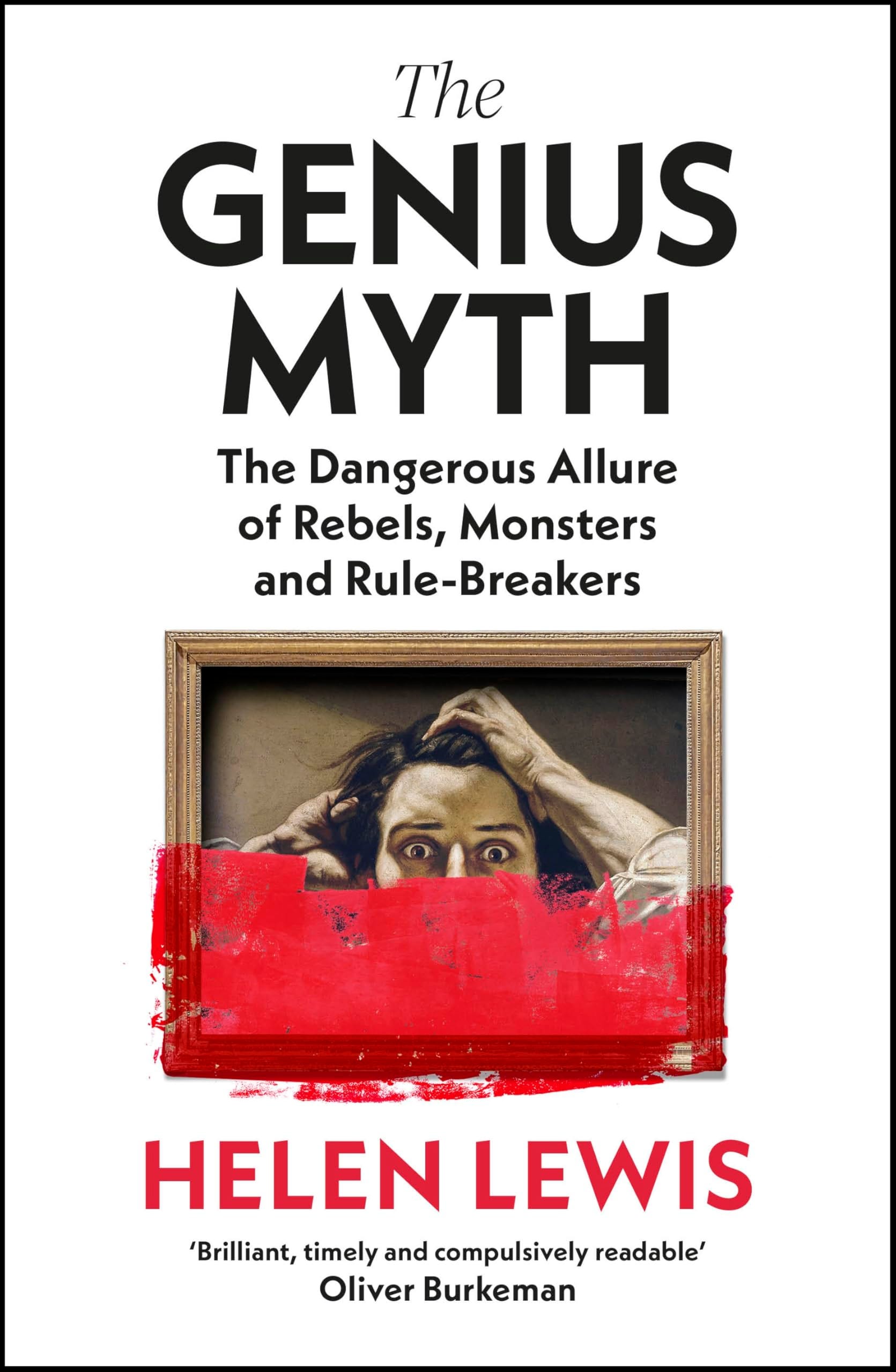
For this piece I am indebted to a wonderful book by Helen Lewis ‘The Genius Myth’. (See link at the end).
You can’t go higher than that.
The description ‘genius’ is number 11 on the dial. It is the cherry on the top of all human achievements in specific fields.
But, be aware that defining someone as a ‘genius’ is a conversation stopper, not a starter, no further discussion is required, or permitted. Once the label is attached, it becomes an unassailable fact.
Genius is a special category, reserved for the truly great; a kind of rarefied club that excludes the vast amount of people who ever lived.
In a way, this is a comfort to us; firstly, because there is something to be said about humanity that these people actually exist/existed, and secondly it lets us off the hook. This is because it’s an ideal that most mortals can only dream of; so, don’t bother trying. We can relax into our banality and mediocrity and just get on with our lives.
Genius or talent?
An apt quote from Schopenhauer; ‘The man of talent is like a marksman who hits the mark that others cannot hit. The man of genius is like a marksman who hits a mark he cannot even see!’
Is it possible to draw a dividing line between talent and genius? When we are looking at martial artists past and present, are we seeing talent or genius?
For those who understand big numbers; between talent and genius, is it the same huge gulf that exists between a billion and a trillion?1
The solitary and the collective.
Let’s face it, genius is the cult of the individual. They don’t tend to congregate in packs. We like to associate it with a lonely and solitary pursuit; the Joseph Campbell-style ‘warrior/hero quest’. We don’t like to think of a place where genius thrives in multiples (more of that later).
Martial art solo quests.
So many past martial arts luminaries, men of talent/genius (and they are almost exclusively men) suffer a self-imposed period of isolation, that results in some kind of revelation which turbo-charges their development. A few examples:
· Ueshiba Morihei, founder of Aikido, prior to his enlightenment, took himself away into the mountains, where witnesses say strange noises and events occurred. This may or may not have happened, but he wasn’t the same person afterwards.
· Mas Oyama, founder of Kyokushinkai karate also packed his bag and disappeared into the mountains. He shaved an eyebrow off vowing not to return to society until it grew back. Very similar to the painter Théodore Géricault who shaved his head in order to finish off his masterpiece, ‘The Raft of the Medusa’.
· Akiyama Shirobei Yoshitoki, the founder of Yoshin Ryu Jujutsu, retreated to a temple for a hundred days to experience his big revelation and found his system.
· Suzuki Tatsuo of Wado Ryu also did a self-imposed exile in a mountain location, but I think with him it was more of a ‘hair shirt’ thing.
The idea of the martial arts as a solo quest is not the fuller story, mostly because martial arts training and development involves engaging with other people. It’s alright spiriting yourself away up a hillside and fighting with your imaginary demons, but the real work has to be done with live opponents.
This is where in Japan the Musha Shugyo, the Warrior Pilgrimage, comes in. In the old days this meant multiple duels and numerous Dojos to train in; hence… other people and their contribution to your quest.
This is the same thing as Knight Errantry in medieval Europe. But the Musha Shugyo has its origins in the concept of the wandering Zen monk questing on his Angya in search of enlightenment - perhaps a rarified form of genius. If so, that somewhat goes against the Western mythology that geniuses are born and not made?
Every ‘genius’ needs to be in a ‘scenius’.
This concept of ‘scenius’ was a play on words invented by the musician Brian Eno. He put forward the idea that for the genius to survive they needed to be in a productive creative ecosystem, with the right people around them – think of Florence during the Renaissance, Silicon Valley after WW2 or Robert Oppenheimer at Los Alamos. Could we perhaps also include Kano’s Kodokan, 1890’s to 1930’s?
Along with the ‘scenius’, the times need to be ripe for such ideas to flourish; the world has to be ready. Picasso knew this; his groundbreaking painting, ‘Les Demoiselles d'Avignon’ was hidden away for nine years before he decided that the public would accept it; even then it was a shock.
If we acknowledge the concept of the scenius, I have to ask; could such a scenius exist in the martial arts world today? The depressing conclusion I have come to is; if it does exist, it’s well hidden. (comments below might be interesting).
Martial arts genius – can we speculate?
In modern times, it’s really difficult; was the late Kuroda Tetsuzan (of the Shinbukan Kuroda Dojo) supremely talented or a martial arts genius? Opinions differ, but my thoughts tend towards that he was probably one of the last Japanese martial artists who was able to do the amazing things that the previous generations might have taken for granted.
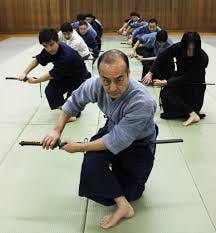
Kuroda Tetsuzan image courtesy of Budo Japan.
Ueshiba Morihei is a tricky one… almost a category on his own. His leaning towards shamanism and esoteric magic make him so very difficult to judge. Was he actually a genius? I really don’t know who is qualified to answer that; unless you drew up a crude tick list of ‘genius points’ that could be applied?
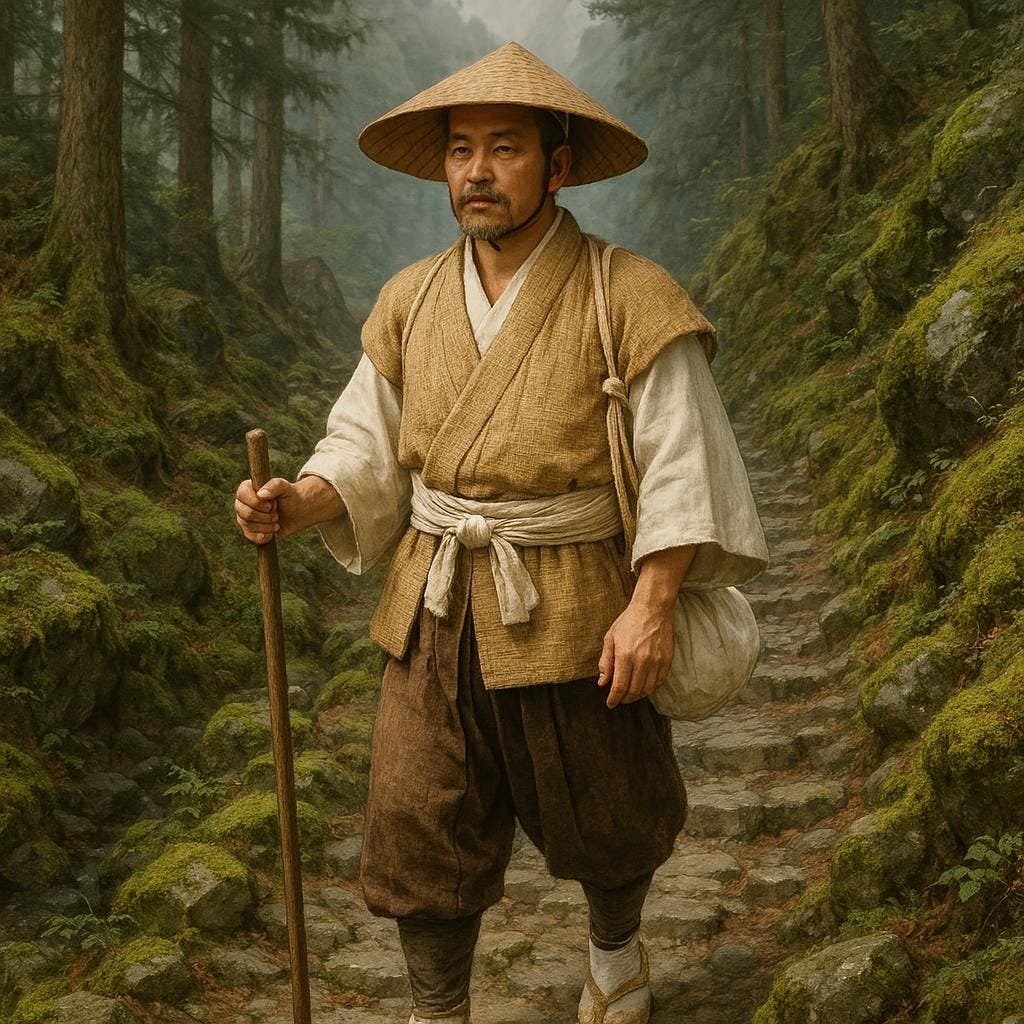
Imagined image of Ueshiba on a mountain retreat.
Further back in time you have to try and see your way through the myth-building and hyperbole; another almost impossible task. Just how much of a genius was Musashi Miyamoto?
Late bloomers.
You don’t have late bloomers in gymnastics; you’re over the hill in your early 20’s.
Whereas, Aikido author John Stevens stated that Ueshiba Morihei was in his ‘physical prime’ when he was in his 50’s. So, with regard to him specifically, I have to wonder; what was the real technical difference between Ueshiba at 51 and Ueshiba at 71? And in there, where does the genius reside, if at all?
Of course, it has to be said that some people would put the idea forward that Ueshiba wrestled the goose that lays the golden egg from Takeda and Daito Ryu and put his own rocket boosters on it, all channelled through the physical prowess of Ueshiba himself. It’s an interesting proposition.
Karate Dojos of the more traditional types here in the UK tend to be populated by older people. Whether that is because they are the tail-end of the 1970 and 80’s martial arts boom, or that youngsters are drawn towards sports karate specialists, it’s difficult to tell. This makes the ‘scenius’ seem a little sparse; unless we think that late bloomers is a real thing in Trad Karate? (again, an open question to readers?)
Here’s another thought: How many potential Japanese martial arts geniuses never came back from the Pacific War? I have read enough karate history books and articles which mention that period and are full of lamentations about wonderfully talented people who ‘never made it back’.
How many geniuses died too young in other disciplines across the world, in the arts for example?
Too young.
Poet Thomas Chatterton, who in 1770 committed suicide at the age of seventeen. And, more recently, all those members of the ‘27 Club’, musicians who never hit their 28th birthday (Brian Jones, Jim Morrison, Janice Joplin, Jimmi Hendrix, Amy Winehouse, Robert Johnson, Kurt Cobain, Richey Edwards, etc.) The argument; did they hit their peak and everything would have been downhill if they had lived – we will never know (was Hendrix a genius anyway?).
It's all so tricky, whether you are a martial artist of a musician.
If you really want to dig into this, read Helen Lewis’s book, ‘The Genius Myth – The Dangerous Allure of Rebels, Monsters and Rule Breakers’. https://www.amazon.co.uk/Genius-Myth-Helen-Lewis/dp/1787333248
A helpful analogy to understand the difference between a billion and a trillion is to think about time: a billion seconds is roughly 31.7 years, while a trillion seconds is about 31,700 years.
Thanks I didn’t know about his: Musha Shugyo the Warrior Pilgrimage